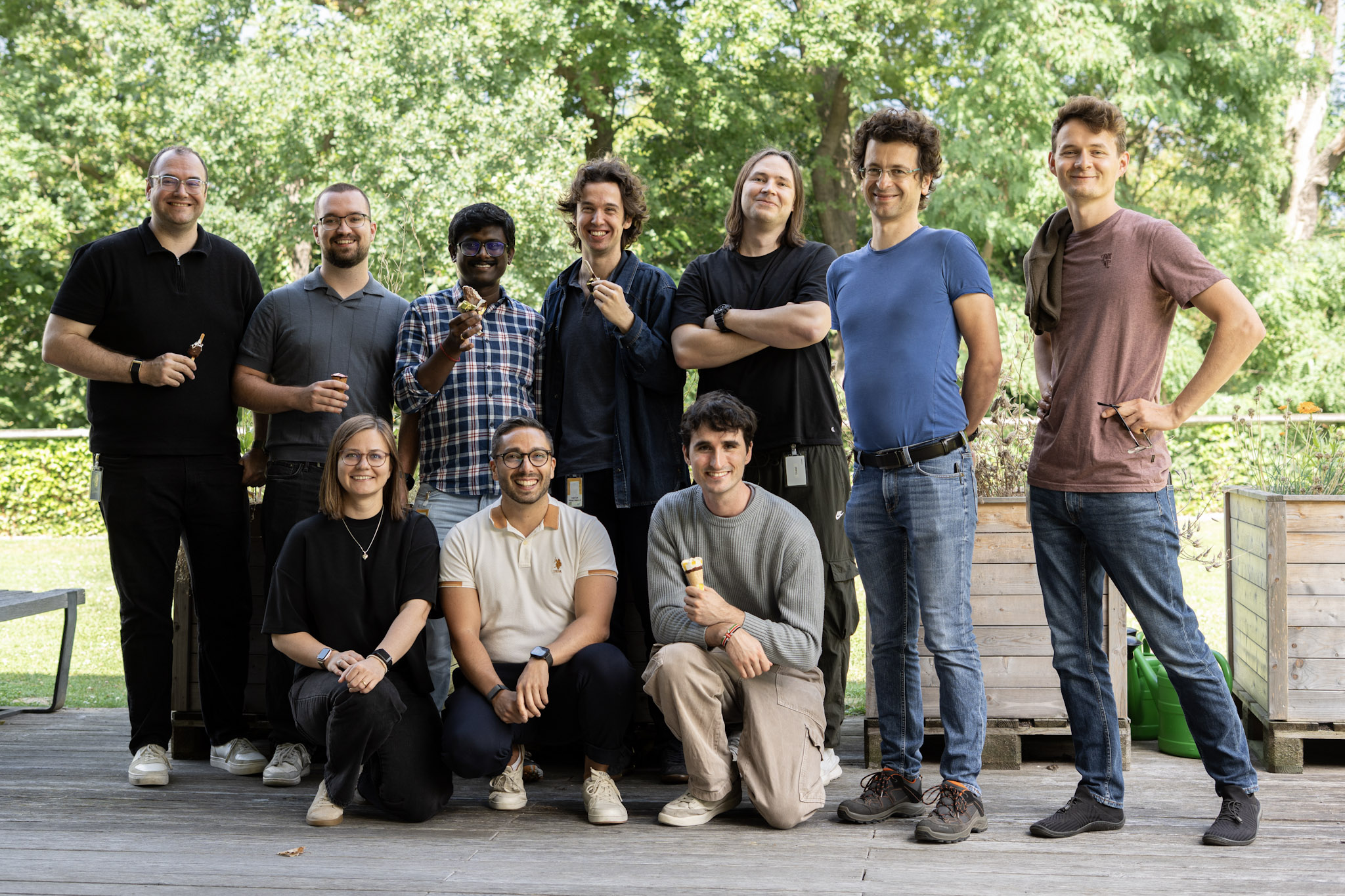
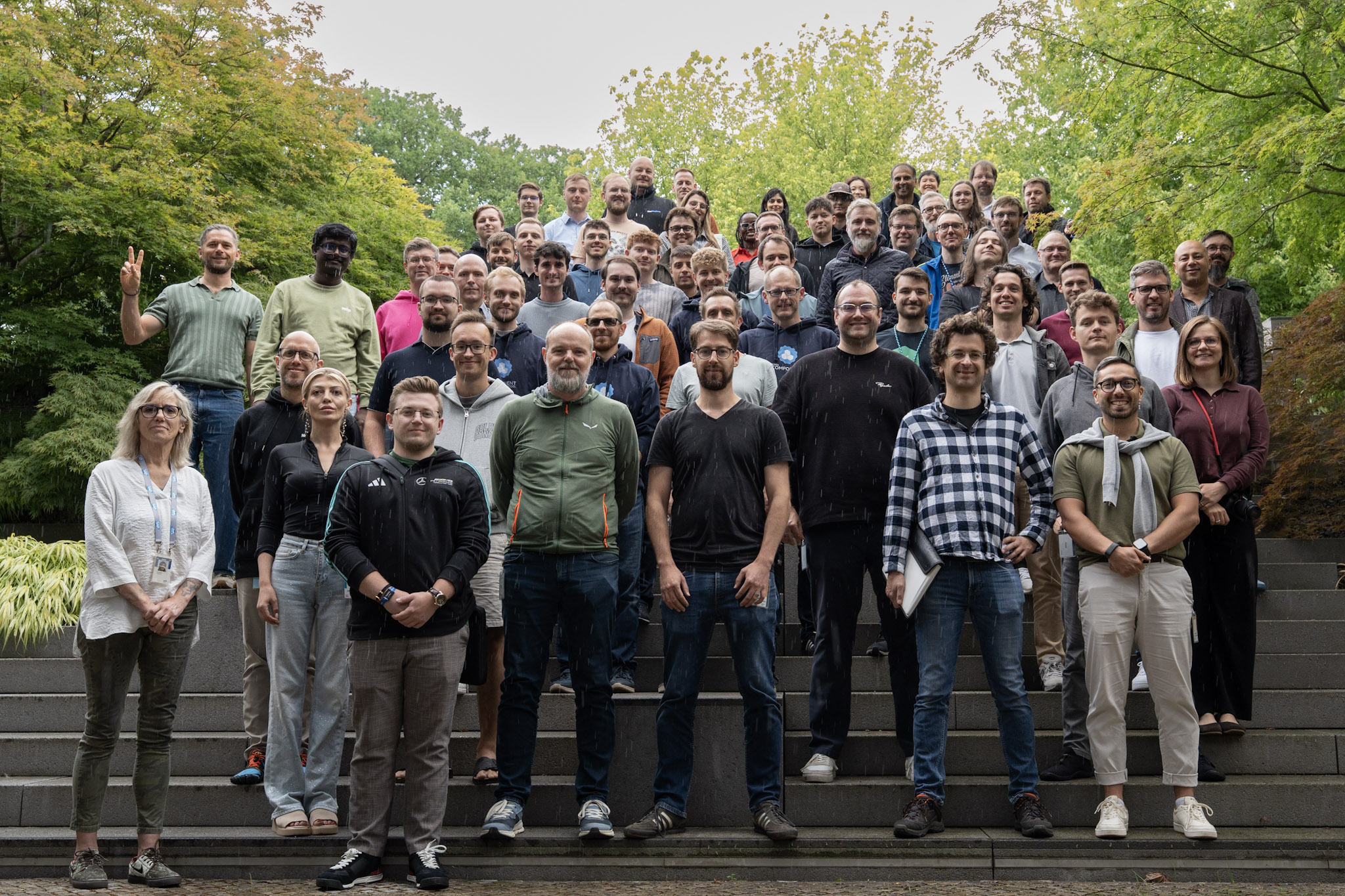
From 21 to 24 July we spent four days at the SAP Innovation Center in Potsdam with other open-source projects from the ApeiroRA (IPCEI-CIS) and NeoNephos ecosystem. SAP was so kind to provide us with food, drinks and many great minds working together on interesting projects in the IPCEI-CIS initiative.
The IPCEI-CIS Initiative is a program that brings sovereignty to Cloud Infrastructure and Services. Our Naira team joined the event with our still young and fresh software, looking for how to leverage the ecosystem and where to integrate with other solutions.
Our entire team could join the hackathon.
From a Thalamus plugin to an inference provider abstraction
Thalamus is a vendor-neutral, Kubernetes-native inference service for sovereign LLM deployments. Models are declared as Kubernetes custom resources, routing happens through the Gateway API Inference Extension, and weights, prompts and context never leave the deployment perimeter. For anyone running regulated workloads that can't go to a hyperscaler AI provider, that is the interesting part.
For Naira, Thalamus is a source of exactly the entities our catalog cares about: models and model versions, and the inference endpoints that serve them. So we started where you'd expect with a dedicated collector plugin, so that everything Thalamus serves shows up as a first-class, governed asset in the catalog alongside the assets already there.
Then the plugin started looking familiar. Thalamus exposes an OpenAI-compatible API, and almost everything we had written was talking to that.
The Thalamus plugin provided us the foundation for a generic OpenAI API-compatible inference provider plugin, with Thalamus as the first implementation behind it. Anything else that speaks the same API can be connected by pointing configuration at it, rather than by writing a new collector from scratch. Provider-specific details stay in a thin layer where they belong.
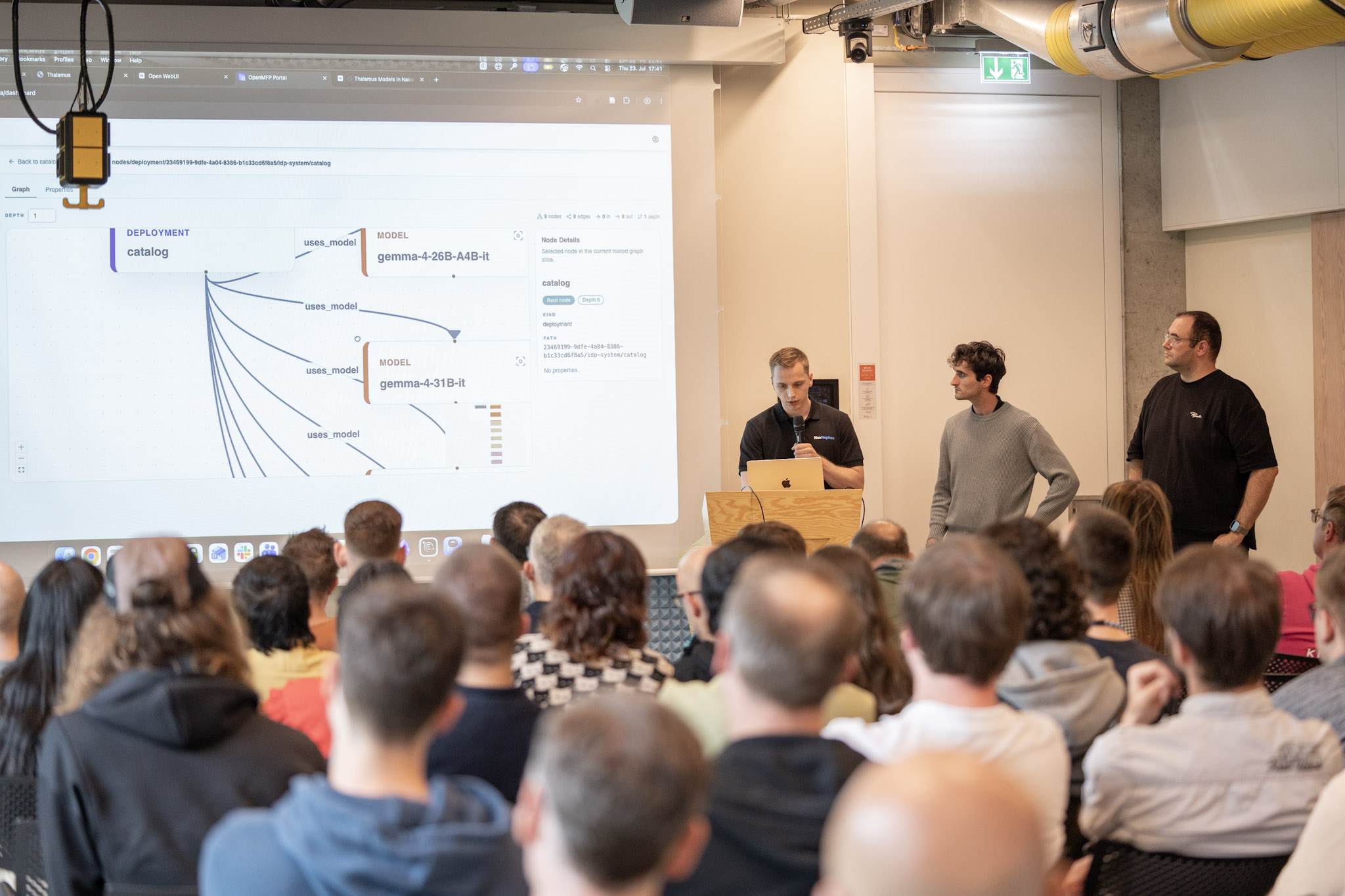
This is the sort of refactor that is hard to argue for in a design review and obvious after an afternoon of pair programming with the team that owns the other side of the API.
An MCP server for Naira
The second track was about how people get at the catalog. The UI is one answer. It is not always the fastest one, especially when the question is something like which models are actually served in this environment, and who owns them.
So we built an MCP server for Naira and wired a chat UI (Open WebUI) on top. It exposes catalog operations as MCP tools, which means you can ask what's available, inspect an asset and its relationships, and trigger actions conversationally from the chat, or from any MCP-capable client.
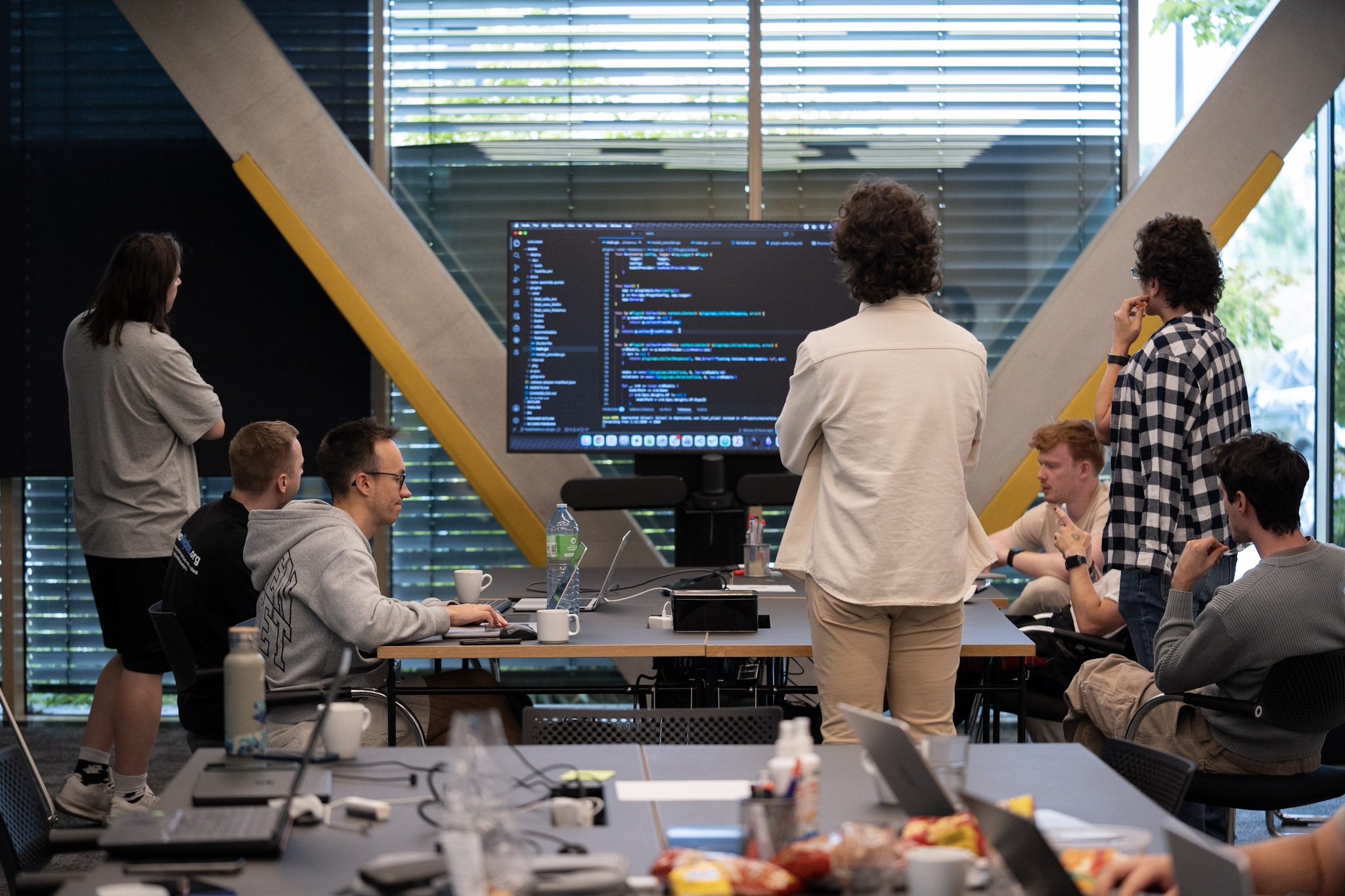
It is early and deliberately minimal. But it is a real artifact to iterate on, and it surfaced the harder problem underneath: an agent is only as good as the context it can reach. The value grows with how much of the landscape the catalog has collected, and the challenge becomes correlating that information and keeping it retrievable, which is a catalog problem, not a chatbot problem.
Where Naira stops
We used also the time with kcp, Platform Mesh and OCM to draw lines.
The useful conversations weren't about integrating for the sake of it. They were about which concerns belong where: multi-tenant control planes and API management sit with kcp and Platform Mesh; describing and transporting software components is OCM's problem; and what's genuinely left for an AI engineering hub is the connected, queryable view across models, endpoints, integrations, delivery state and ownership.
Being in one room with the people who own those answers saved weeks of asynchronous back-and-forth, and in a couple of cases stopped us from building something that already exists one layer down. For a project at our stage, knowing what not to build is worth as much as any feature.
Try it, and tell us where it breaks
Everything above is in the open:
- Naira - naira-project/naira
- Thalamus - cobaltcore-dev/thalamus
task platform:deploy gets you a local kind cluster with the full stack; the README has the details. Naira is alpha; APIs and concepts still change on short notice, so the most useful thing you can do right now is run it against your own inference setup and open an issue or a discussion when it doesn't fit.
If you run an OpenAI-compatible service that isn't Thalamus, we'd particularly like to hear whether the new abstraction actually holds for you.
Naira, Thalamus, kcp, Platform Mesh and OCM are all part of the ApeiroRA and 8ra activities, funded by the EU IPCEI-CIS and supported by companies such as SAP, who also sponsored this hackathon.
Funded by the European Union
We are a new project and part of ApeiroRA which is an Important Project of Common European Interest - Next Generation Cloud Infrastructures and Services (IPCEI-CIS).
🌐 ApeiroRA? ApeiroRA is a reference blueprint for an open, flexible, secure, and compliant next-generation cloud-edge continuum and therefore a key contribution to IPCEI-CIS. At a high level, the projects of ApeiroRA allow users to provider-agnostically fetch, request and consume services, and for service providers to describe, offer and provision their services.
Learn more about ApeiroRA by checking out the official website at https://apeirora.eu/.